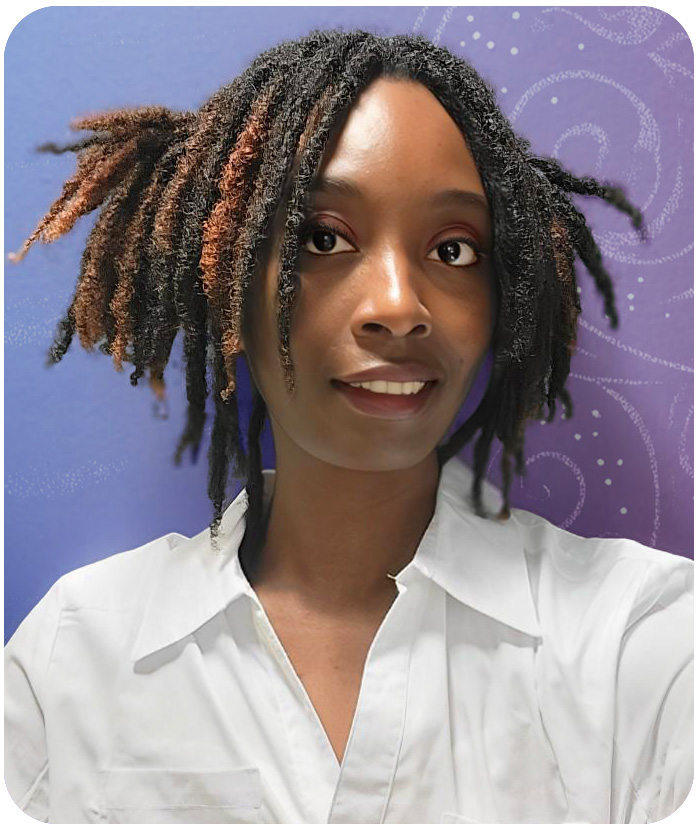
Shauna Sagaji’s journey began at the age of ten, when she discovered the power of her imagination, weaving intricate stories that danced just out of reach. A life-changing battle with cancer revealed her true calling, igniting a passion to share her narratives with the world.
Now, as a creative, she blends her talents to inspire others through storytelling. Empowered by faith and resilience, Shauna is ready to take the literary world by storm—one captivating story at a time.
1) When did you know that writing is what you were called to do? What is it about being a writer that you love the most? What about being a writer frustrates you the most?
Hello Jimmetta, I appreciate you taking the time to have this interview with me. To answer your first question, I realized that story telling was my calling at a very young age. I was around ten when I first started weaving full-length stories in my mind. They weren’t just fun little tales; they were like movies playing out in my head — movies that I really wanted to see. It wasn’t until I grew older that I felt compelled to share them. Writing became my lifeline, especially after my battle with cancer. That experience truly sparked my passion, and I realized that storytelling—becoming an author—is the path I want to follow.
There are a number of things I love about being a writer. One of the things I love most is the ability to build worlds and create characters that feel real, especially those whose stories often go untold. It’s deeply empowering to give voices to experiences and cultures that are frequently overlooked.
I would say one of the most frustrating parts of being a writer, however, is the self-doubt that creeps in during my revision process. There’s always that little voice I have questioning if my story has any flaws — should I change this or that, is the message clear, or will people be happy with how the ending wraps up? Navigating that constant need for perfection, learning to trust my voice, and pushing through my uncertainty can be annoying. But I know it’s part of the journey, and ultimately, it makes the victory of finishing a project that much sweeter.
2) Can you tell us a little about your book(s) and where our readers can find out more about them and you?
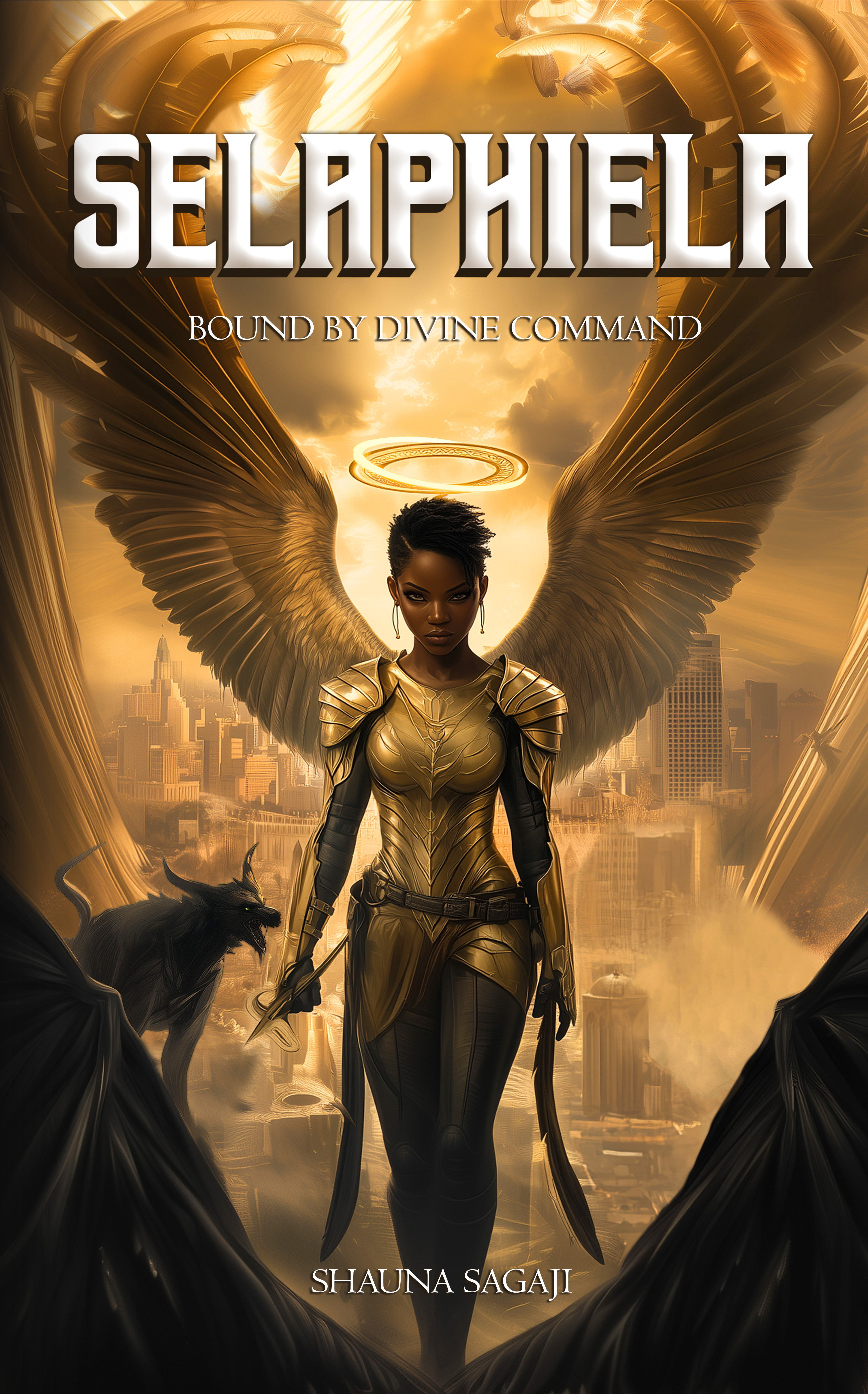
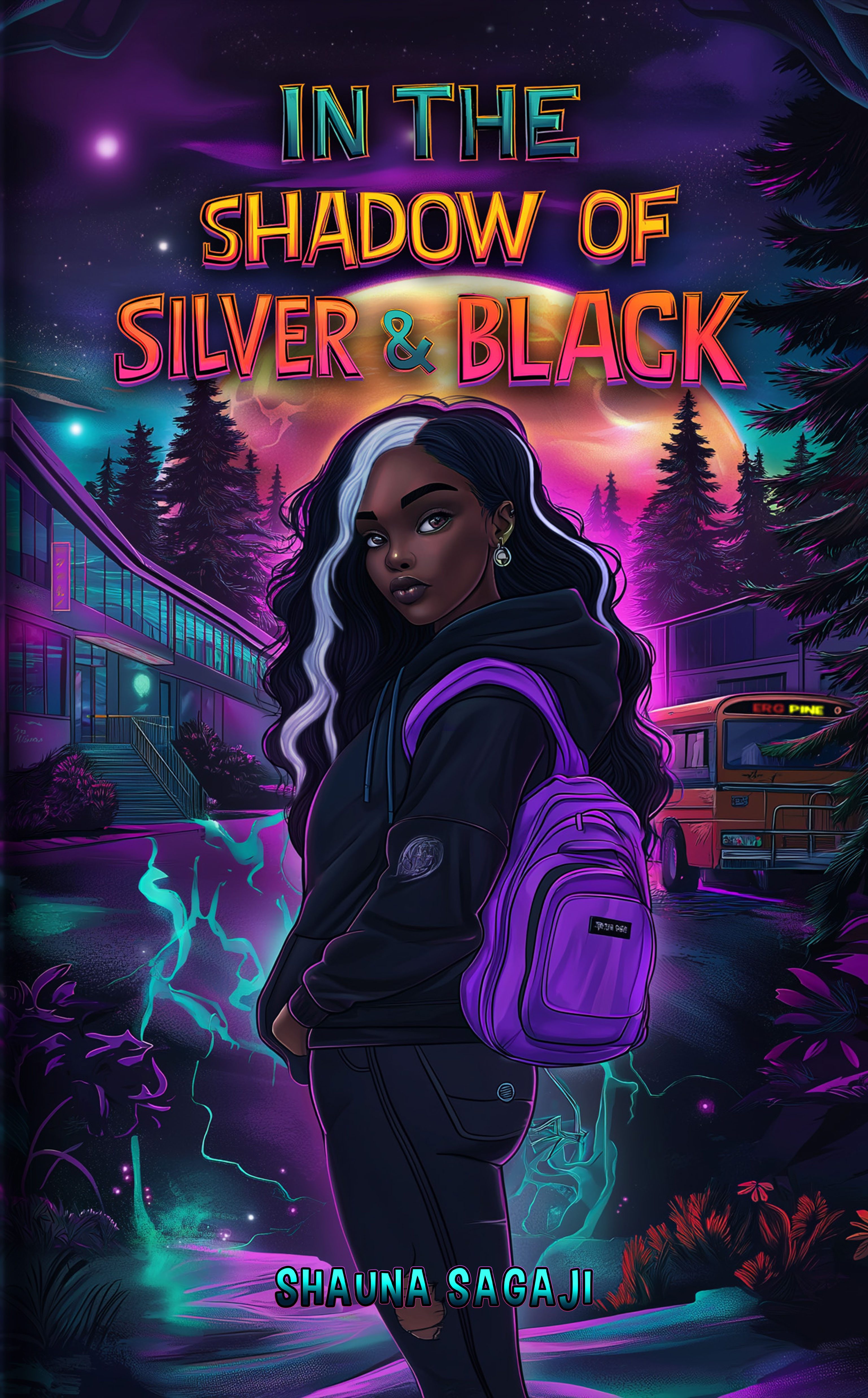
I currently have three published works. My debut as an author was ‘Selaphiela’, released in October 2024. It’s a Christian fantasy about an Archangel being cast down to present-day Earth. I spent over three years working on it, revisiting it periodically. My second book, ‘In the Shadow of Silver & Black’, came out in February 2025. This one is especially close to my heart because I wrote the first half when I was just sixteen. It follows a young girl with psychic abilities whose life is complete chaos. Finally, there’s ‘Acrelix’, also released in February 2025. To sum it up, it’s about a couple of werewolf assassins finally having to deal with the consequences of their actions. Interestingly, Acrelix began as a full-cast production audiobook, which I later adapted into a paperback and hardcover. All of my works fall within the fantasy genre, and I primarily write for new adult and adult audiences, though I do plan to explore YA in the future. Overall, I’m beyond excited to share these stories with the world!
If you’d like to learn more about my books or stay updated on upcoming releases, I encourage you to visit shaunasagaji.com. It’s the best place to learn more about me and explore my work.
https://www.amazon.com/stores/Shauna-Sagaji/author/B0DJJWJMF7
3) What projects are you currently working on?
There’s a lot going on behind the scenes. I’m currently deep my next book that leans more on the horror side of fantasy. I want to constantly bring something new to the table. So, I’m always striving to keep my stories fresh and meaningful. I am also currently in the process of developing an audio book for my book Selaphiela as well.
4) What has been your most significant achievement as a writer thus far? Where do you see yourself within your career in the next five years?
My most significant achievement so far has been the creation of Sagaji Publishing and the ability to publish stories that truly reflect what I want to see. Being able to create a space where my voice can thrive has been incredibly rewarding. In the next five years, I see myself expanding my reach—both with my own writing and with the growth of Sagaji Publishing. I want to continue building my platform and help empower even more creators to share their stories with the world. I also envision collaborating with other storytellers and pushing the boundaries of fantasy in ways that challenge and inspire readers.
5) How have you dealt with rejection within your writing career?
Some of the first rejections I experienced in the author’s world happened when I was sixteen. I remember querying publishing agencies and receiving “Thanks, but no thanks” letters one after another in the mail. Honestly, I wasn’t fazed by it. I thought it was exciting just to have a publisher take the time to respond to me. I saw those rejection letters as little trophies. But I also understood that they didn’t get my vision because they were sticking to the status quo, not wanting to push boundaries.
Most forms of rejection don’t affect me, but on the rare occasion that they do, I take the time to reflect, learn from it, and then move forward. The key is persistence and staying true to my voice, no matter what others might say. Writing is a long game, and each rejection only strengthens my resolve to keep going.
6) Do you have a schedule for when you write? Do you outline your novels? How long does it generally take you to finish a novel?
I do try to keep a flexible writing schedule, though it’s often influenced by what’s going on in my life at the time. I carve out time in the mornings, when I’m most inspired, and try to write consistently. As for outlining, I’m very detailed in mapping out my entire book from start to finish. I find that it makes the writing process go much smoother. I’m not the type to just let my characters lead me down unexpected paths. From time to time, I do get inspired to shift gears, but for the most part, I know exactly how my story is going to unfold.
I do understand that the creative process is fluid, so I like to leave room for discovery. On average, it can take me a few months to finish a novel, depending on the complexity of the story and how many projects I’m juggling at the time.
7) Do you believe that there is ever a point in life where it’s too late for an aspiring writer to become successful in this industry? Do you feel a late start would hinder their chances?
Absolutely not. It’s never too late to pursue your passion for writing. Life is full of lessons, and every experience can enrich your writing. I will never believe a late start in life will ever hinder your chances at all — in fact, I know it gives you a deeper understanding of the world and yourself, bringing a richness to your stories. If anything, a later start can help you craft more authentic, relatable narratives because you’ve had time to live and grow. Everyone’s journey is unique, and there’s room for all voices at the table.
8) Are you an avid reader and have you always been? What’s the first book you ever read that really touched you emotionally and moved you? Who is your favorite author? What book are you currently reading?
While I wouldn’t exactly call myself an avid reader, I do enjoy diving into stories when the mood strikes. However, I prefer not to read too much from other writers because I don’t want their styles or ideas to influence my own voice. I tend to picture my stories more like movies or TV shows, so I approach storytelling in that way — visualizing scenes and dialogues in my head as if I’m watching them unfold on screen.
The first book that I ever read that really sparked an emotional reaction in me was ‘To Kill a Mockingbird’. The darkness and realism of the story left a lasting impression, but in a way, it also left a negative taste in my mouth. It was that book, and its harsh portrayal of a side of reality, that actually pushed me into the world of fantasy. I was craving something different — something that let me escape into more imaginative, hopeful worlds.
As for my favorite author, I’d say I don’t have one yet. I’m more inspired by the way stories make me feel rather than specific writers. And right now, I’m not reading anything, but I’m always brainstorming my next big project!
9) Given the recent shake-ups in publishing, what are your thoughts about how the publishing industry is being represented today? Do you lean more towards traditional publishing or self-publishing as a preference? Does being a hybrid author interest you?
I see it as the publishing industry is going through a transformation period, and I think it’s a good thing. We’re seeing more opportunities for diverse voices, but there’s still a lot of work to be done. Personally, I believe in the power of both traditional and self-publishing. Traditional publishing offers resources and a platform, but self-publishing allows for more control and direct interaction with readers. I’m not currently interested in being a hybrid author, but who knows what the future holds. The beauty of the industry right now is that it’s evolving, and there’s room for authors to explore different paths.
10) I feel like writing is a remarkable tool to help people not only express themselves but also to cope emotionally and mentally. I know for me, I write to be and feel more authentic. What unique quality is there about you, about your art, that you feel represents your authenticity? How does writing help you to be more empowered in your purpose?
Writing is deeply therapeutic for me. It’s where I can unpack my experiences and explore the truths that lie within them. What makes my writing authentic is my commitment to sharing stories that reflect the richness of black culture and our experiences. My characters and worlds are reflections of the beauty, complexity, and resilience of my people. Writing empowers me because it allows me to challenge the boundaries of traditional fantasy and reshape the narrative, showing that we, too, have a place in these magical worlds. Through writing, I feel more connected to my purpose—to inspire others, share our stories, and uplift our voices.

 Write 2 Be Magazine