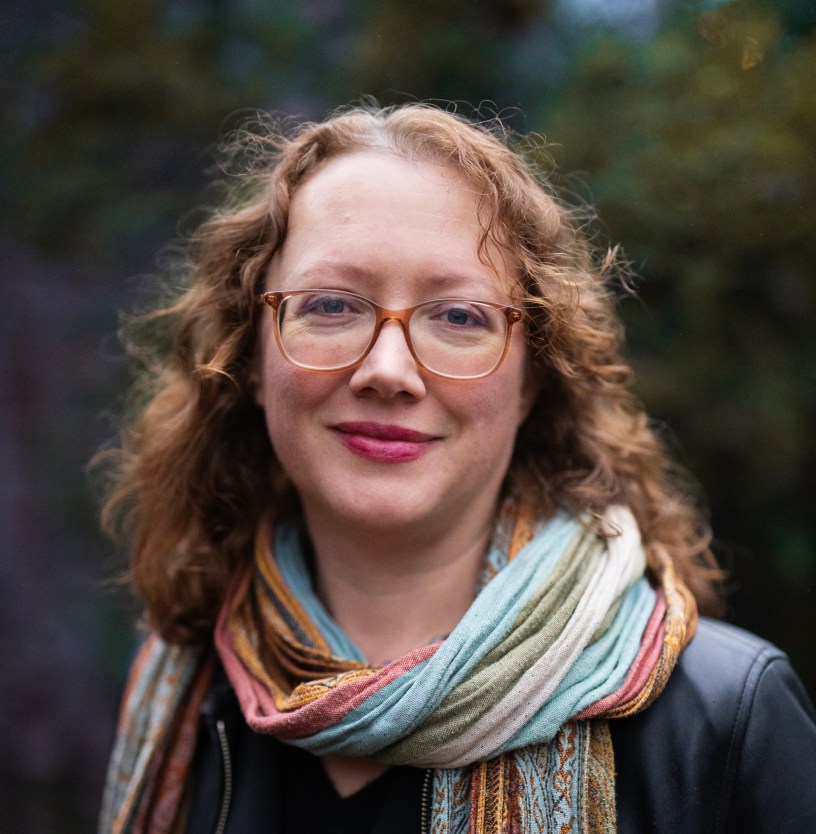
Beth Gibbs is an author who loves bringing the magic of the American West to life in her fiction. She writes about strong women, witches and spirits who face battles while living outside the norms and need to embrace their own magic to thrive. In all of her work, food plays a big role, due to her own love of culinary creations, and because a character going through rough times still needs to enjoy life. Beth lives in Portland, Oregon with her husband and loves to go on adventures, from local hikes to road trips to walks all over the world. She has a background in fine arts and human resources and comes from a family of storytellers.
https://www.bethgibbsauthor.com/
https://www.notapipepublishing.com/
https://bethgibbs.substack.com/
https://www.instagram.com/pacific_northwitch/
1) First, I want to thank you for taking the time to do this interview with me! When did you know that writing is what you were called to do? What is it about being a writer that you love the most? What about being a writer frustrates you the most?
I’m excited to be chatting with you, appreciate the opportunity! I’ve always loved storytelling, exploring it through visual art for years. In 2013 I took a writing class that started me down the committed writing path. I remembered that a year or two before that a friend has asked where I wanted to see myself in 5 years and “I want to be a published author” came out of my mouth, my intuition knowing before my conscious mind where I was headed.
There are so many things I love about being a writer but the joy in crafting a story to help us understand our world and our experiences is by far the most important to me. I love being part of a community exploring how words and our stories can connect us and create new modern myths to be passed down.
The frustrating aspect of writing is the same in a lot of creative endeavors, how hard our societal structure makes it to focus on that wholeheartedly and still thrive. I’m enjoying learning the business part of writing though personally I still struggle with balancing that to getting words on the page.
2) Can you tell us a little about your book(s) and where our readers can find out more about them and you?
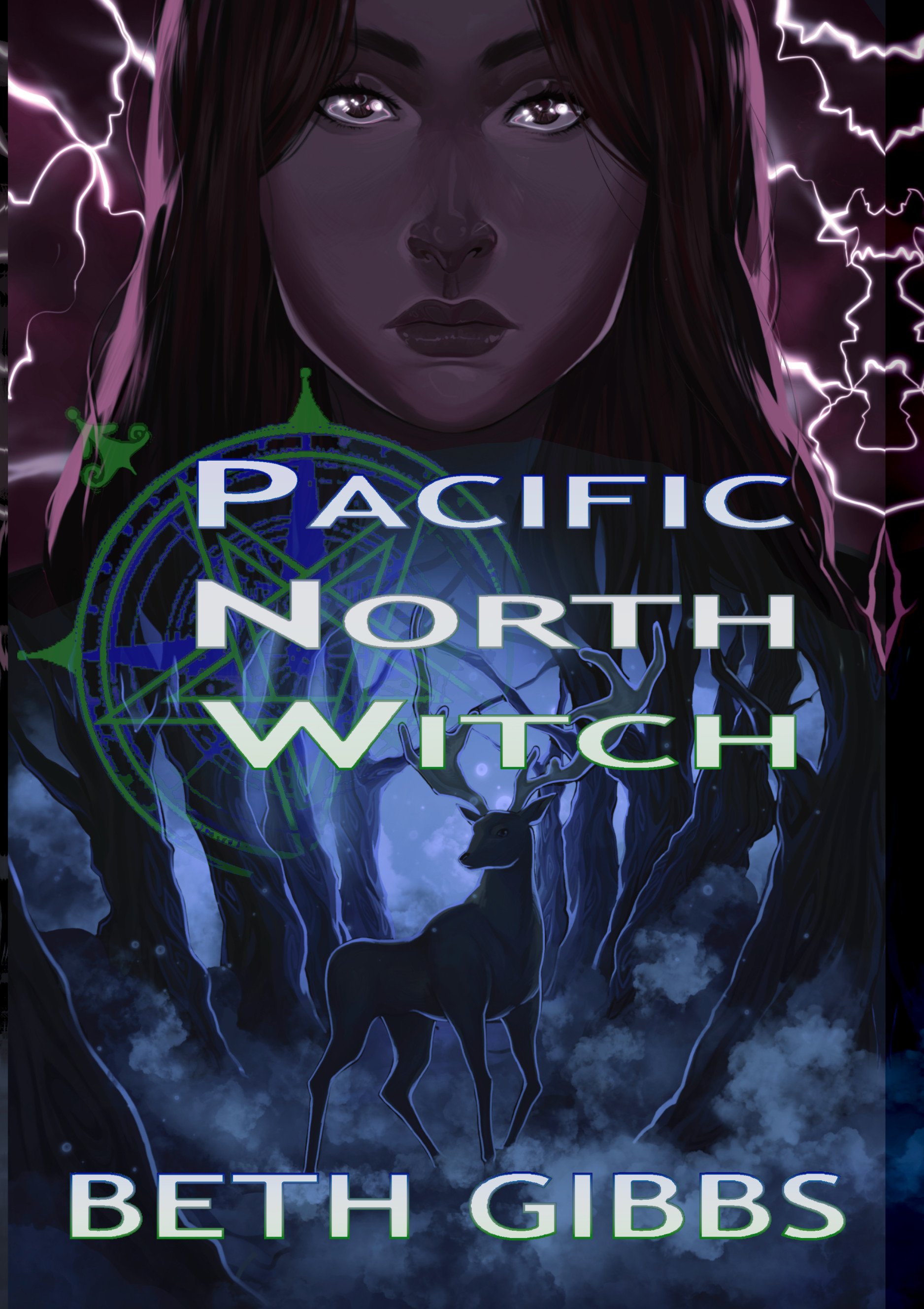
Pacific North Witch is a fantasy novel about Reva Quinn, a young woman reeling from a mental health crisis who moves to an all-women’s commune on the Oregon coast with her estranged aunt. The commune isn’t just for women though, it’s for witches and Reva doesn’t believe in magic. Not anymore. Reva begins to start to embrace her new home, her new roommates and even tentatively magic but a darkness is hunting her. To stop the demon leading the white supremacists in town and save her fellow witches and herself, Reva has to embrace her true power.
When I started working on the book, I wanted to write something that was fun to read about witches while still exploring serious issues. I’ve come to realize with this book and the one I just finished that one of my main themes in writing is women embracing their true power and believing in themselves.
Readers can find out more on my website and my publisher’s website:
https://www.bethgibbsauthor.com/
https://www.notapipepublishing.com/
I also write a monthly newsletter called Pacific Northwitchery on Substack. It comes out monthly on the full moon with a lunar focus and a writing prompt. What can I say, I’m a bit witchy.
https://bethgibbs.substack.com/
3) What projects are you currently working on?
I’m editing a novel I finished last year that’s also about witches and magic, my writing theme still going strong. I’m writing three different novels right now: two sequels, one to Pacific North Witch and another to the novel I’m editing (featuring a cult of fairies who feed off music fandom) and another one that is shaping up to be a love story with killer robots and parallel worlds. My goal for November is to pick one (always my challenge) and focus on it.
4) What has been your most significant achievement as a writer thus far? Where do you see yourself within your career in the next five years?
Getting Pacific North Witch published is by far my most significant achievement. My favorite part of my publishing journey is the day I received word from Not A Pipe Publishing that they wanted to publish my book. I was 24 miles from the end of a solo 500-mile walking pilgrimage across Northern Spain, one day before walking into the cathedral in Santiago de Compostela. I woke up to a bed bug outbreak a few beds down from where I was sleeping, an absolute river of water coming out of the sky and an email that said: “We want to publish your book!” I walked 12 miles carrying a 17-pound pack under pouring rain with soggy socks and shoes and the absolute biggest smile on my face. Such a great day.
Pacific North Witch is the first novel I’ve ever finished (but not started – don’t all of us writers have that file folder/drawer full of half written stories waiting) but not my last. In five years, I plan to have at least three more novels finished and be making a solid income from writing.
5) How have you dealt with rejection within your writing career?
My three stages: Pouting, self-reflection and then moving forward. I think it is okay to give oneself time to feel whatever a rejection notice brings up but don’t wallow. I find the self-reflection stage more helpful. I ask myself questions like: was this publication the right fit for this piece in hindsight, would I want someone who doesn’t resonate with my work trying to represent it, was there anything in the process I could do better in the future? But then it’s time to move on and not dwell on it because rejection is going to happen. Just keep trying – your readers are out there waiting for you.
6) Do you have a schedule for when you write? Do you outline your novels? How long does it generally take you to finish a novel?
I daydream about being one of those very disciplined writers who has a set schedule for writing but I’m still working on that, my creativity comes in waves. I try to prioritize writing in the afternoons after I complete business items.
I’m not an outliner though I do what I think of as sketches: jotting down plot notes, character profiles and important dates in the story. The sketch isn’t always the first thing I do – sometimes a free write turns into more and then I do the story sketch. Sometimes the idea comes to me first and I do the sketch before starting the project. And then I follow the story where it wants to go, checking the sketch for continuity but being flexible to change.
It took me 5 years to finish Pacific North Witch as I was working in a full-time leadership role in my other career (human resources). Last year I took a break from the HR career and wrote the first draft for another novel in about 6 months. I’m hoping that I unlocked some sort of new writing level recently and the latter is how long it will take me rather than the former!
7) Do you believe that there is ever a point in life where it’s too late for an aspiring writer to become successful in this industry? Do you feel a late start would hinder their chances?
No, that’s something I love about writing. It doesn’t have a shelf life related to your age and it benefits from life experience. If one searches around, there are so many later in life writing success stories to point to, including folks interviewed here in Write 2 B Magazine. I like to stay focused on my path and what feels like success to me, not some yardstick measurement I didn’t put in place. When I told a friend of mine that I was getting published, she focused her excitement on the fact that I wrote a book, like great on the publishing but damn, you wrote a whole book! I still think of that whenever I get anxious about my writing future – I wrote a novel, and I loved doing it. I encourage other writers to focus on that – you wrote this amazing book/poem/story so celebrate that. You’re in charge of your life story – tell it with pride and don’t let the outside stop you from doing so.
8) Are you an avid reader and have you always been? What’s the first book you ever read that really touched you emotionally and moved you? Who is your favorite author? What book are you currently reading?
I was that kid who wanted to read at the dinner table, gripped by a story too good to put down. I don’t think I snuck a book under the table on my lap to try to sneak read but only because my older sister had already tried that and got busted. One of my favorite books as a kid was Howl’s Moving Castle by Diana Wynne Jones – it’s a fairytale with a lot of depth for the age group. It left a mark on my writing all these years later. I still reread it every few years.
It’s so hard to pick a favorite author but I’m a big fan of Naomi Novik, her novels Uprooted and Spinning Silver are my favorites. She has a book of short stories just released that I’m keen on reading. I also adore the quirky writing of Aimee Bender and highly recommend her novel The Particular Sadness of Lemon Cake.
I’m in-between novels to read but I’ve just started a rare-for-me nonfiction book called After by Dr. Bruce Greyson, all about his extensive research on near-death experiences. I heard him speak on the science podcast Ologies and was intrigued with his scientific but open approach to the subject. So often in science we get the impression that everything is complete but science is an exploration of the unknowable.
9) Given the recent shake-ups in publishing, what are your thoughts about how the publishing industry is being represented today? Do you lean more towards traditional publishing or self-publishing as a preference? Does being a hybrid author interest you?
I think we’re at a fascinating juncture in the industry. I’m not someone who follows it in great detail but just like there are different points in history that were big shifts, I think we’re at another one. Printing costs are much lower, and the digital market has opened up access to self-publishing in a real way so that more diverse voices that weren’t represented in the past are now able to get through. AI will have an impact, some of which we are seeing but I don’t think we know the full scope yet.
I lean more traditional publishing at this point. I love working with a small press – the human touch is very present and the community among the other authors is great. Hats off to the self-published authors though! I could see going a hybrid route after I get more comfortable with the business side of writing (marketing, branding, etc.) but I love having professionals who have experience with areas I do not and can champion my book with me.
10) I feel like writing is a remarkable tool to help people not only express themselves, but also to cope emotionally and mentally. I know for me I write to be and feel more authentic. What unique quality is there about you, about your art, that you feel represents your authenticity? How does writing help you to be more empowered in your purpose?
That resonates with me. The times when I feel a sort of anxious drifting, I turn to writing to ground me, to process the churn of thoughts. There are also those moments in writing when you find the words to create a feeling, an experience that connects to a reader on a personal level, and it generates a feeling of being seen in the world and of shared links to each other. I strive for that in my writing, to achieve that since I’m so grateful to have experienced it as a reader, to feel that very human connection even though the differences between us seem so vast. It feels more important than ever to create and look for that.
 Write 2 Be Magazine